Leaders who are shaping the future
Behind every expert is a personality that shapes their work.
To better understand these personalities, PSI spoke with leaders who are driving real change across various industries.
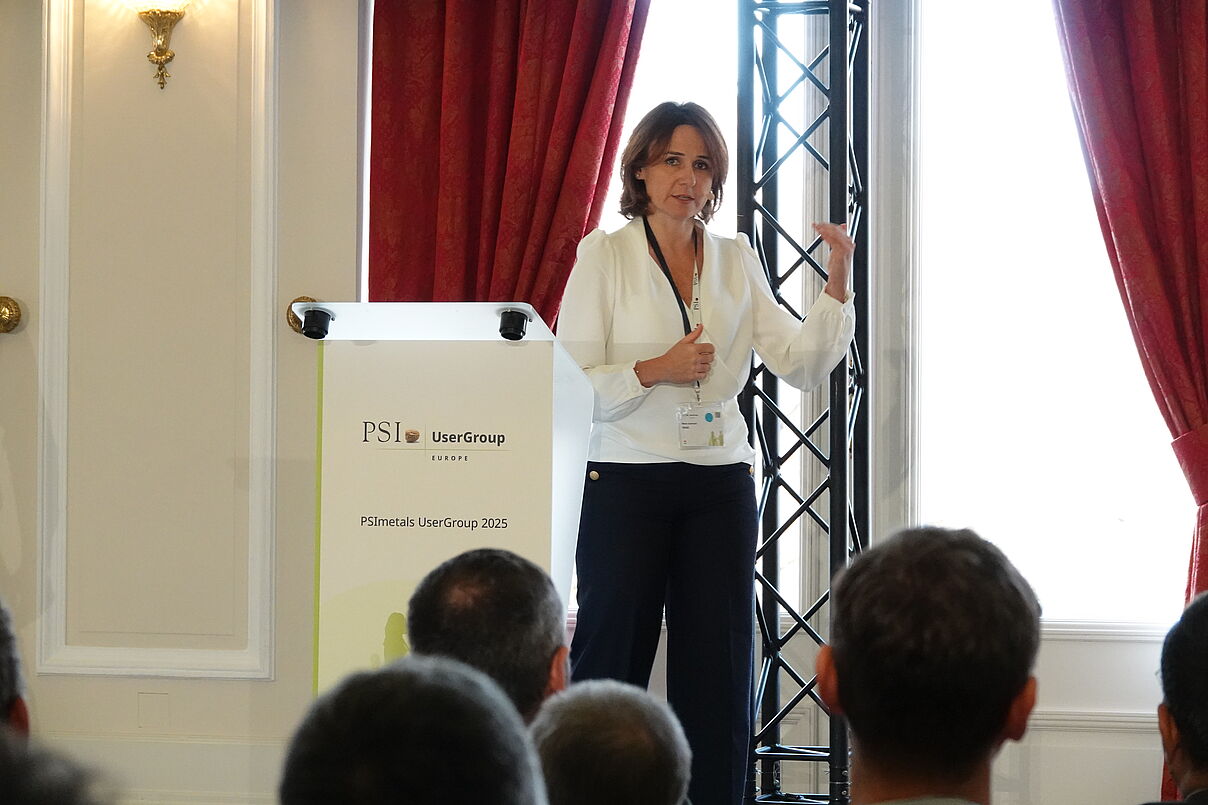
Maria Germain, Head of Production Platform, SSAB
Since 2007, Maria has held a broad range of technical and leadership responsibilities within the global steel and industrial transformation sector. Following the completion of her PhD in Energy Systems and Processes with high honors at École des Mines de Paris, she progressed through several international roles across sales, operations and digital transformation. Today, as Head of Production Platform at SSAB, Sweden, Maria plays a key role in advancing the company’s fossil-free steel strategy and large-scale production platform modernization initiatives.
In their latest steelmaking transformation project, SSAB Europe commissioned PSI to implement PSImetals as a key component of its Green Steel production. The integrated solution for production management will support the digitalization and automation of SSAB’s mini-mill in Luleå, Sweden, forming the foundation for a future production management landscape.
Q: What motivates you beyond professional achievements and why?
What motivates me most, beyond achievements, is curiosity and connection. I enjoy learning new things and tackling challenges that push me to think differently—it keeps the work engaging and meaningful.
At the same time, I’m really motivated by the people I work with. I value the sense of belonging that comes from being part of a team where you can share ideas openly and support each other. That mix of learning and connection is what keeps me motivated day to day.
Q: Is there a personal habit or routine that has shaped the way you work? What is that and how did they shape the way you work?
A habit that’s really shaped how I work is actively seeking out different perspectives. I make a point to ask for input, especially from people who think differently than I do, and to really listen to what they’re saying.
It’s helped me avoid blind spots, make better decisions, and keep communication open. Over time, it’s made my way of working much more collaborative and grounded in a wider range of ideas, rather than just my own viewpoint. It has also helped me better navigate complex situations.
Q: What’s one thing you really enjoy and one thing you really dislike that your team might not expect?
I really enjoy getting into technical discussions about steel processing and optimization — even if no one expects me to dive that deep. There’s something fun about the intellectual challenge, and those conversations genuinely energize me.
What I don’t enjoy is when discussions aren’t precise or concise and we start drifting in circles. That’s when my inner irritation lights up… but I try to keep it very professional on the outside. Although some colleagues who have worked with me for quite some time can see it on my face.
Q: In your experience, how does sharing personal experiences influence the way teams work together?
I think that sharing personal experiences creates a layer of trust that purely professional interactions rarely achieve on their own. When people feel comfortable bringing more of their authentic selves into the workplace, communication becomes more open and empathetic. It helps teams move from pure professional collaboration into something more personalized and cohesive. It drives us to better understand each other’s perspectives, strengths, and challenges. That’s what leads to truly successful teamwork in the long run.
Q: What is one lesson or principle you hope your team carries with them?
I hope the team keeps the habit of asking ‘why?’, not just once, but enough times to truly get to the root of a problem. One should not accept things just because that’s how we’ve always done them. You don’t need decades of experience to question a process and spot a better approach. Fresh eyes, honest curiosity, and a willingness to dig into the real root of a problem can also lead to smart and meaningful improvements.
Q: What is one misconception of our industry that you wish more people understood?
One misconception I think people have about steel industry is that steel industry is “old-fashioned” or purely traditional. Even though in some perspective it is traditional, it is also a highly complex and innovative industry. Steelmakers were among the first to adopt automation, leverage data, and use advanced optimization models to improve efficiency and quality. It’s an industry where technology, engineering, and problem-solving work together in ways most people don’t realize.
Q: If you had to spend time on a desert island and could only bring two items, what would they be and why?
A good detective novel and a knife — one to keep my mind entertained and the other to keep me alive while waiting for the rescue. Whether on a desert island or in a complex transformation program, survival really comes down to two things: resourcefulness and staying curious enough to keep your brain switched on.
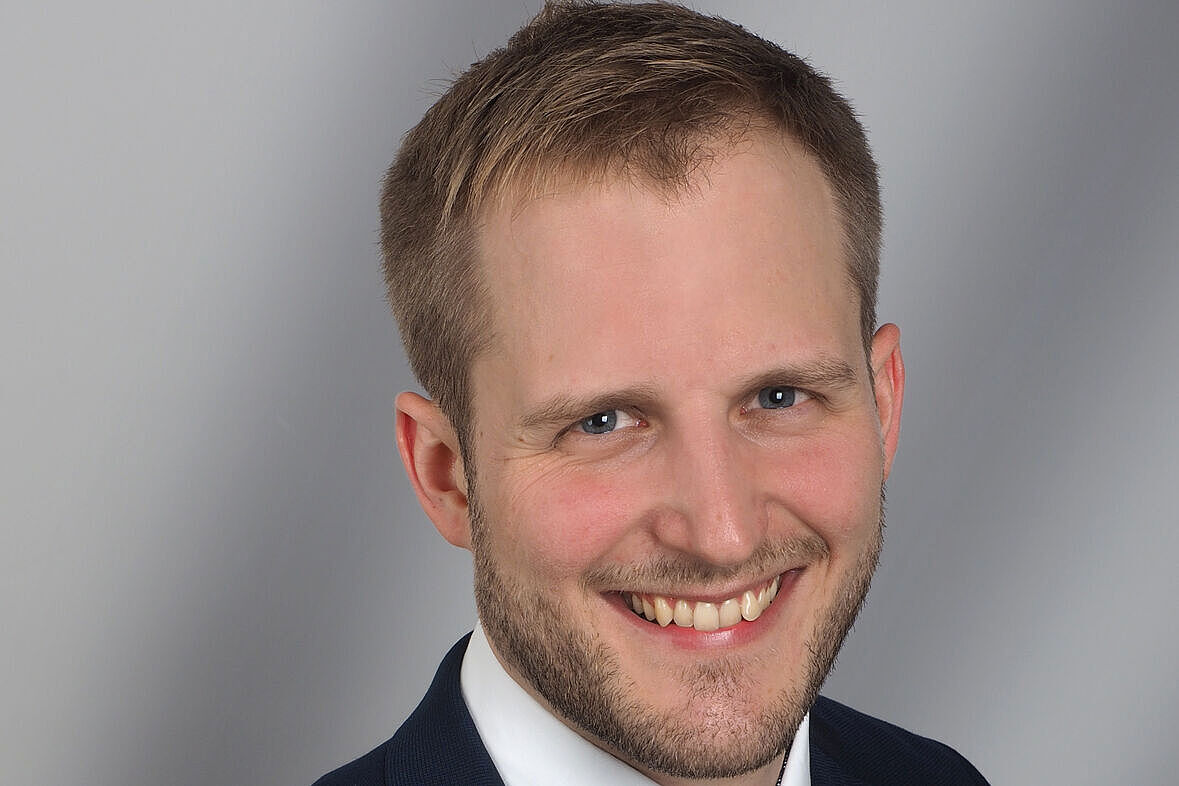
Stefan Dalhues, Team Lead PMO & Supporting Functions, Research and Innovation, PSI Software SE
Stefan Dalhues is the Team Lead for PMO & Supporting Functions in the Research & Innovation Department of PSI Software SE, where he leads research projects in the context of curative congestion management, AI driven anomaly detection and other decision support functionalities. Stefan holds a Master’s Degree from Technical University of Dortmund, where he was a Research Associate at the Institute of Energy Systems, Energy Efficiency and Energy Economics (ie³).
Q: What motivates you beyond professional achievements and why?
Being a part of the energy transition is a powerful motivator for me. Reducing fossil fuel dependency and integrating renewables is one of the defining challenges of our generation. PSI provides the ideal platform to engage with these processes from multiple angles, allowing me to collaborate with brilliant minds to solve the complex problems that arise along the way.
Q: Is there a personal habit or routine that has shaped the way you work? What is that and how did they shape the way you work?
As an innovator, the biggest challenge is maintaining a broad perspective while staying focused. I have made it a habit to seek frequent exchange with both internal and external experts. These "knowledge loops" provide fresh inspiration and critical ideas for creating great products. Over time, this has built an outstanding network of brilliant personalities that I can rely on to solve even the toughest technical hurdles.
Q: What’s one thing you really enjoy and one thing you really dislike that your team might not expect?
As an electrical engineer, I’m always ready for a deep dive into power systems – honestly, that’s probably exactly what my team expects! What might surprise them is that I secretly struggle with stage fright. Every time I step in front of a large audience, I’m "freaking out" internally. Apparently, my "superpower" is a calm exterior; people often compliment my composure while I’m actually just navigating the adrenaline.
Q: In your experience, how does sharing personal experiences influence the way teams work together?
Sharing personal experiences builds relatability and trust. It provides context for how we think and why we make certain decisions, reminding us that we are all human. In my experience, this human connection transforms collaboration; it makes finding solutions much more intuitive and effective than the sterile exchange of emails between strangers.
Q: What is one lesson or principle you hope your team carries with them?
Radical honesty paired with mutual respect. Giving and receiving candid feedback is the only way to grow – both as individuals and as a unit. It requires practice and a high level of trust, but mastering this is what ultimately transforms a group of people into a high-performing team.
Q: What is one misconception of our industry that you wish more people understood?
The energy transition is often dismissed as too slow or too expensive. However, we’ve already achieved milestones that were once considered impossible – such as renewables covering over 50% of Germany’s electricity consumption. While we still face significant challenges, especially regarding cost-efficiency, the determination within the power industry to reach net neutrality is immense. We are much further along than public perception often suggests.
Q: If you had to spend time on a desert island and could only bring two items, what would they be and why?
Surviving requires calories and shelter, which is a tall order for just two items! I’d take a high-quality knife for building shelter and food prep. The second would be a sturdy blanket – essential for warmth and comfort. However, if it’s a tropical climate, I’d swap the blanket for a fire starter. My biggest concern isn't the shelter, though – it’s whether I can find wild coffee beans on that island. Without caffeine, the survival challenge becomes truly serious!
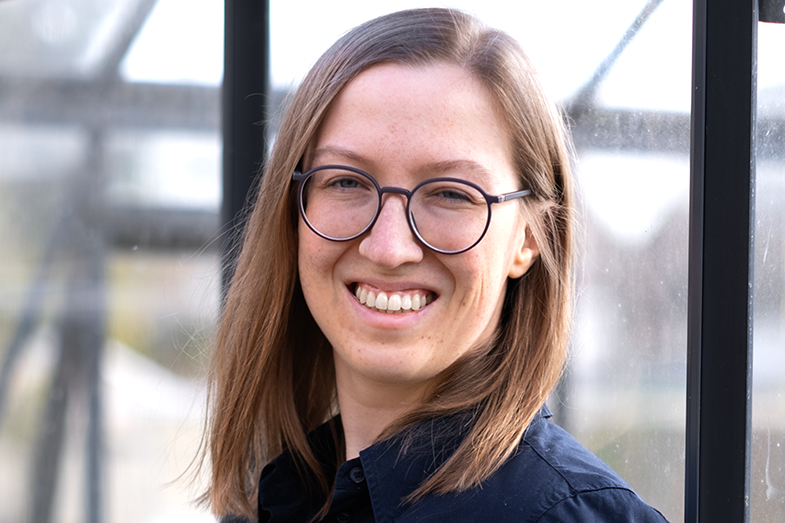
Johanna Ellen Bauke, Innovation Manager, PSI Software – Grid & Energy Management
Since 2022, Johanna Ellen Bauke has taken on a dynamic range of technical and project leadership responsibilities within the smart grid and energy network management sector. Following the completion of her Master’s degree in Industrial Engineering and Electrical Power Engineering at RWTH Aachen University—complemented by a specialization in Artificial Intelligence at Ghent University—she rapidly progressed through several roles across software engineering, research, and project management at PSI. Today, as Innovation Manager Smart Grid at PSI Software SE, Johanna plays a key role in advancing the company’s strategic development of innovative solutions and AI technologies for low-voltage power grids.
In her latest initiatives, Johanna is spearheading the usability re-design of the PSIngo software suite and driving the market launch of a new software solution for PV system control tests in accordance with § 12 EnWG. Additionally, she is actively involved in various research projects shaping future energy systems—such as laying the foundation for local energy markets within the InterPhaSe project—and regularly presents these technological advancements at industry trade fairs and expert forums.
Q: What motivates you beyond professional achievements and why?
What motivates me most is the joy of co-creating things that endure. Currently, my main driver is contributing to the energy transition. I love diving deep into complex challenges and finding efficient solutions through continuous learning; for me, stagnation is a form of distress. I find my strength in nature: multi-day trekking trips with a tent, for instance north of the Arctic Circle, keep me grounded. these expeditions demand endurance and teach me to focus on the essentials, helping me balance my professional drive with the necessary inner composure.
Q: Is there a personal habit or routine that has shaped the way you work? What is that and how did they shape the way you work?
A defining habit of my work is the conscious shift in viewpoint. Through my experiences in development, project management, and product management, I have learned to analyze challenges from a wide variety of angles. Before making a decision, I prioritize listening to different opinions and anticipating the logical thinking of other departments. This helps me view hurdles not as roadblocks, but as solvable tasks. My goal is always to find solutions or compromises that resonate with all stakeholders involved.
Q: What’s one thing you really enjoy and one thing you really dislike that your team might not expect?
I find the process of structuring, turning chaotic ideas into a clear framework, extremely satisfying. I also thrive in deep work phases, where I can fully immerse myself in a technical concept. In this state of flow, I block out everything else until a solution is reached. Conversely, I have little patience for aimless, high-level meetings. When valuable time is spent on vague discussions instead of developing concrete actions, I get restless. I need to feel that we are moving toward a tangible result.
Q: In your experience, how does sharing personal experiences influence the way teams work together?
I believe sharing personal experiences is vital for breaking down professional silos. We often talk past each other because we are stuck in our respective domains. By sharing stories, we find common ground and understand why someone prioritizes or reacts in a certain way. This fosters empathy, enabling the team to reach consensus and make collective decisions even in difficult situations.
Q: What is one lesson or principle you hope your team carries with them?
One principle close to my heart is openness to new ideas paired with uncompromising honesty. I believe the best solutions aren't found through cautious restraint or a "we’ve always done it this way" mentality, but by addressing hurdles openly and asking uncomfortable questions. Being honest with one another, even when things get difficult, creates the foundation for real impact. Only a culture where everyone can share their views freely creates the space for the innovations needed for the energy transition.
Q: What is one misconception of our industry that you wish more people understood?
A common misconception is that solutions for our distribution grids can still be developed and implemented top down. Just as physical energy no longer flows hierarchically from the top down, this approach no longer works for digitalization. Especially in low-voltage grids, we are facing a complex software engineering challenge with high security requirements that cannot be solved in isolation or by regulation alone. Modern software systems cannot be designed like static infrastructure; they require a highly sophisticated team effort, merging the expertise of cybersecurity specialists, computer scientists, and engineers.
Q: If you had to spend time on a desert island and could only bring two items, what would they be and why?
My first item would definitely be a solar-powered water desalination plant. As someone who works with efficient energy solutions, securing basic resources is the logical first step to remain capable of acting. Second, I would take a blank, rugged notebook with an indestructible pen. On a deserted island, I would finally have the uninterrupted time to develop concepts to their full conclusion without any distractions. Perhaps someone would find them one day …
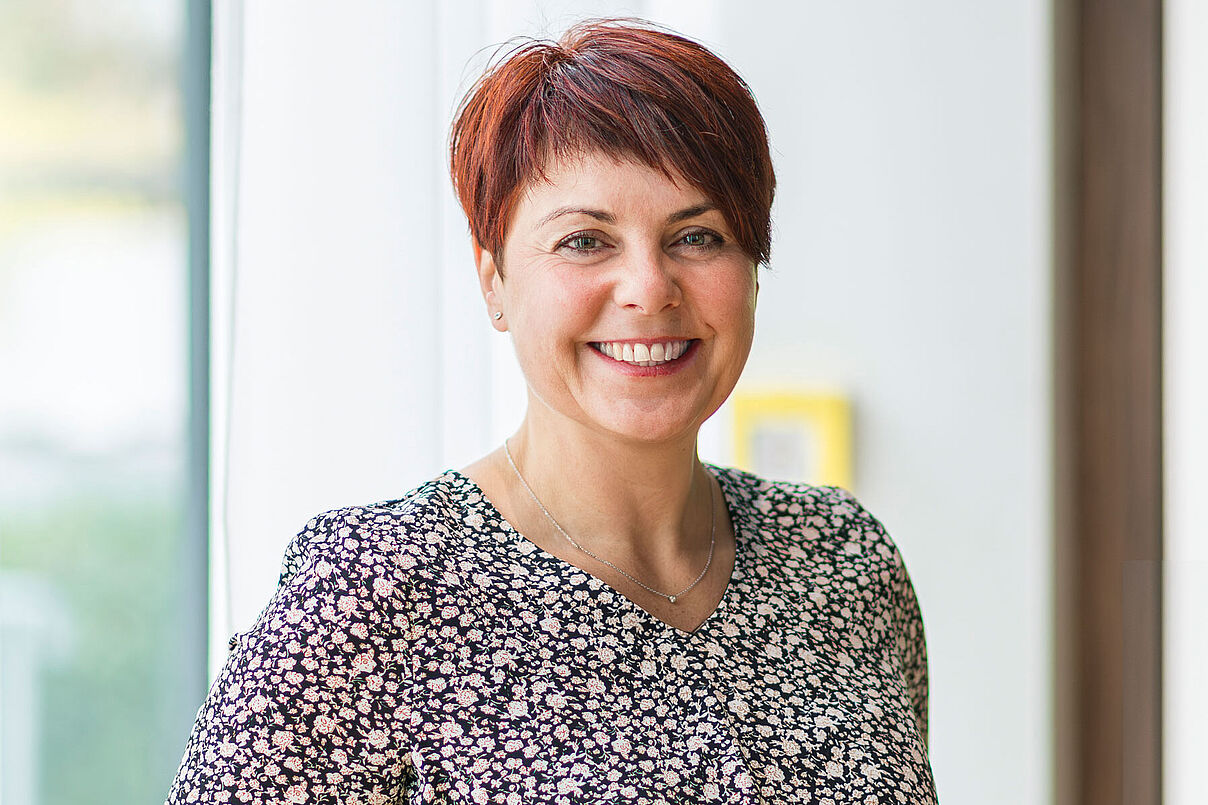
Diana Neu, ERP Project Manager, Rex Industrie-Produkte Graf von Rex GmbH
Diana Neu served as Commercial Director with signing authority at Rex Industrie-Produkte Graf von Rex GmbH for 13 years. Today, she is responsible for digitalization and project management related to PSIpenta at Rex, where she actively drives the further development of processes and organizational structures. She has also been closely involved with the PSI community for many years.
Q: What motivates you beyond professional success, and why?
I’m not motivated by success itself, but by when real change happens—in people and in systems. When clarity emerges, responsibility is taken on, and things suddenly start running more smoothly. That’s exactly where it gets exciting for me. I enjoy working at the intersection of structure and attitude, because that’s where real development happens.
Q: Is there a personal habit or routine that has shaped the way you work? What is that and how did they shape the way you work?
When working on complex projects, I consciously step back to take a bird’s-eye view to maintain an overview and avoid getting lost in the details. At the same time, I rely heavily on my gut feeling. Intuition helps me quickly grasp where the bottlenecks are and what really matters. This combination of perspective and instinct gives me confidence in my decisions.
Q: What’s one thing you really enjoy and one thing you really dislike that your team might not expect?
I love it when things become clear and we get down to business. I particularly enjoy quickly identifying the core of complex issues and deriving concrete steps from them. What really annoys me, on the other hand, are meetings where only problems and counterarguments come up. Usually, no one knows what they want instead. This clinging to the status quo doesn’t get us anywhere.
Q: In your experience, how does sharing personal experiences influence the way teams work together?
It makes a huge difference. When people open up, trust is built and many things become easier. At the same time, it’s important to strike the right balance—it’s not about making everything personal, but about being honest. This leads to fewer misunderstandings, clearer conversations, and collaboration that is significantly more effective and often more relaxed.
Q: What is one lesson or principle you hope your team carries with them?
That clarity is more important than harmony. Not addressing issues ultimately costs much more energy than having a clear conversation. I hope that every team has the courage to take responsibility and address issues directly. That saves time and stress and ultimately leads to better results.
Q: What is one misconception of our industry that you wish more people under-stood?
That ERP projects are primarily technical projects. In reality, the greatest leverage lies with people. If roles are unclear, communication isn’t working, or decisions are lacking, even the best software won’t help. Technology is important, but without clarity and leadership, it becomes difficult.
Q: If you had to spend time on a desert island and could only bring two items, what would they be and why?
A good book and music. The book because I love getting lost in my thoughts and gaining new perspectives. Music because it immediately gets me moving—both physically and emotionally. For me, it’s an important way to find balance, reconnect with myself, and process things.