
Following the sun: global trends, local realities in the metals industry
From Düsseldorf to Seoul, the metals industry speaks the language of AI, sustainability, and digitalization.
Look closer, however, and you quickly realize that the problems this language is used to solve have never been more local. While the trends shaping our industry are global, their true meaning is profoundly regional. As the sun moves across the world’s major metals-producing regions, it reveals an industry that is becoming less homogeneous rather than more. The vocabulary is shared, but the problems we are trying to solve are anything but.
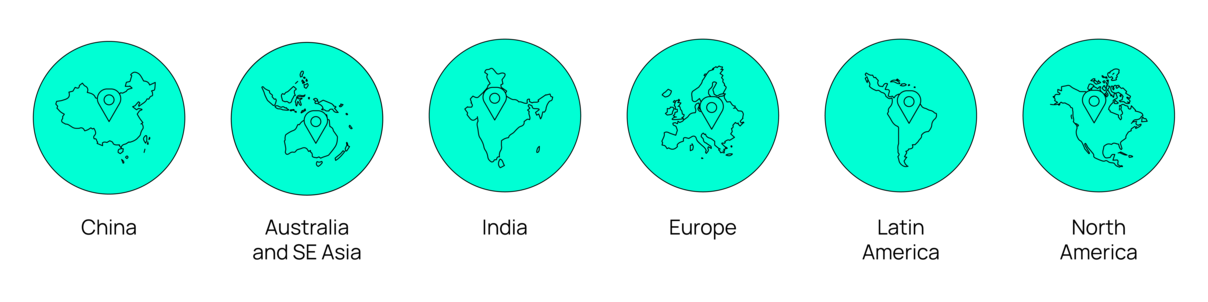
Where should the journey begin?
1. China
2. Australia and Southeast Asia
3. India
4. Europe
5. Latin America
6. North America
The China factor: setting the global stage
No journey through the global metals industry can ignore China because its sheer scale increasingly shapes the conditions under which everyone else competes.
According to the latest OECD Steel Outlook 2026, global steel excess capacity is projected to reach 745 million tons by 2028, approaching the levels seen during the last major steel crisis. China accounts for almost half of global steelmaking capacity, and its steel exports reached a record 113 million tons in 2025. With domestic demand weakening amid a prolonged slowdown in property and construction, Chinese producers have increasingly turned to international markets. Meanwhile, global capacity utilization fell to 76% in 2025 and is projected to decline further.
The ripple effects are immediate: producers in Europe, Southeast Asia, and the Americas face mounting price pressure, while governments worldwide respond with tariffs, anti-dumping duties, and other trade measures. The OECD reports that 27 new anti-dumping cases against China were initiated in 2025 alone.
For metals producers everywhere else, the central strategic question is how to carve out a resilient, high-value position in a global landscape shaped by China’s industrial scale.
And this is precisely where regional nuances come into sharp focus as the same global pressures produce very different strategic responses depending on where you stand. So our journey begins as the sun rises over Asia-Pacific.
Asia-Pacific: green ambitions meet intense competition
Across Australia and Southeast Asia, the metals industry is being pulled in several directions at once. While continuous capacity enhancements, decarbonization, volatile energy costs, and intense competition are putting immense pressure on producers to improve efficiency and speed of response, the local responses to these global forces could not be more different.
For Australia, the green transition represents a massive industrial opportunity. The country’s ambition goes beyond exporting raw materials towards processing them domestically into higher-value, lower-emission products. This strategic shift is fueling a “pit-to-product” green metals revolution, which is an effort to transform Australia’s vast mineral resource base directly into a new generation of low-carbon metals right at the source. The ambition is significant, but so are the challenges. New production routes require vast amounts of renewable energy, new infrastructure, and technologies that can compete economically with established producers. At the same time, challenges facing Australia’s existing steelmakers such as soaring energy prices, legacy equipment maintenance, and the high cost of upgrading traditional blast furnaces underline how difficult it is to transform an industrial base while keeping it competitive. The contrast is striking: Australia is simultaneously positioning itself as a future global hub for green iron ore while its current steelmakers focus heavily on maintaining aging plants and digitalizing operations to remain competitive.
Southeast Asia faces a different combination of structural pressures. While infrastructure-led demand is supporting overall growth, the competition from Chinese imports, trade protectionism, and skills shortages are making it increasingly difficult for producers to compete on price alone. For many local companies, the digital transformation challenge is surprisingly fundamental. Manual data entry, fragmented production histories, and inconsistent quality processes still limit operational transparency. This creates an interesting coexistence of very different levels of digital maturity within the same region. Some producers are investing in integrated enterprise, MES, and automation systems, while others are still establishing the data foundations on which more advanced applications depend.
Vietnam’s Hoa Phat Group illustrates the direction of travel, with significant investment in digital transformation and integrated systems across its operations. The objective is not technology for its own sake, but greater consistency across business processes, production, and quality management.
Across APAC, AI, cloud platforms, and data analytics are attracting significant interest. But the underlying question remains remarkably practical: Can technology help producers compete, manage energy and carbon costs, improve quality, and overcome operational constraints?
India: building the industry while building the digital foundation
If the rest of the APAC region demonstrates the tension between green ambitions and competitive pressures, India illustrates a completely different phenomenon: an industrial base undergoing exponential scale-up and digital transformation at the same time. Driven by massive national infrastructure projects and booming automotive demand, India's steel industry is targeting around 300 million tons of crude steel capacity by 2030.
This rapid expansion creates a unique, dual-speed digitalization challenge:
- The greenfield race: state-of-the-art, highly automated plants are being built from the ground up, requiring advanced, integrated software from day one.
- The brownfield pressure: legacy facilities are under intense pressure to modernize operations, slash production costs, and meet increasingly strict emission and material genealogy standards.
In India, customers want to focus first on the basics - production, quality, and planning - before moving towards advanced AI functionalities.
This transition is made even more challenging by a shifting workforce. As veteran steelmakers retire and take decades of hands-on experience with them, steel plants struggle to recruit highly competitive tech talent to run their new automated systems.
This observation captures an important counterpoint to today’s AI enthusiasm. While Artificial Intelligence dominates global headlines, it is rarely the most urgent first step. For a rapidly expanding industry, building reliable production processes, establishing a single source of truth for data, and securing robust planning foundations are the essential stepping stones. Ultimately, India is not merely digitizing an established industry – it is building its physical industrial capacity and its digital nervous system simultaneously.
Europe: every percentage point counts
As the sun moves west, the priorities change again. Europe’s metals industry faces perhaps the most complex combination of pressures in the global market: ambitious decarbonization targets, volatile energy costs, substantial investment requirements, and increasing competition from low-cost imports.
The challenge is clear: producers must not only produce greener steel and aluminum, but also do so while remaining economically viable. This pressure is forcing a drive toward extreme operational efficiency.
In European plants where automation is already highly mature, the next wave of competitive advantage is no longer about expansion, but about squeezing out the final percentage points of performance and navigating a historic green transition.
This transition is already a reality for Europe’s leading steelmakers. In the Netherlands, Tata Steel Nederland partnered with PSI to implement a new production management solution at its plant in IJmuiden. This serves as a core pillar of its transition to becoming a circular, green steel producer, allowing the company to minimize material downgrades and waste. Simultaneously, in Sweden, SSAB Europe is working with PSI on a holistic production management solution at its flagship greenfield mini-mill in Luleå. As Luleå undergoes a historic transformation to fossil-free steel production, the integrated software will act as the digital foundation, coordinating operations from scrap supply all the way to finished goods.
The European aluminum industry is a high-wire act of balancing ambitious decarbonization goals, high energy costs, and raw material dependencies. The only path to stability is achieving full operational transparency through digitalization.
The situation is just as challenging in the aluminum sector, where recycling scrap requires only 5% of the energy needed for primary production, making high-quality scrap a highly valuable, strategic asset. This shift towards scrap-intensive production models introduces significant operational and metallurgical complexity across planning, melt preparation, and quality tracking.
This drive for end-to-end transparency clarifies the real priority in today’s market. Before a metals producer can deploy any sort of AI, it must first establish a unified digital twin of its operations. AI cannot optimize data it cannot see. For European metals producers, the immediate goal is to use complete operational transparency to squeeze the final percentage points of performance out of their existing assets and enable radical new business models. This creates a clear strategic choice in today’s challenging market: Some producers are responding to difficult market conditions by freezing investments and focusing almost exclusively on short-term cost reduction, while others are using periods of lower demand to invest, modernize, and prepare for the next upturn.
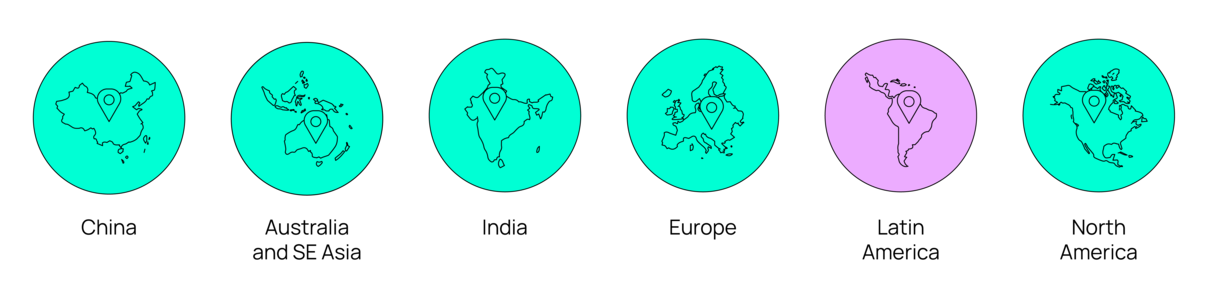
Latin America: turning structural advantages into productivity
Further west, the starting point changes again. Latin America’s metals industry benefits from unique structural advantages such as vast reserves of high-grade iron ore and bauxite, combined with a power grid that is among the cleanest in the world with countries such as Brazil relying on hydropower and other renewables for over 80% of their electricity. These conditions create immediate opportunities for low-carbon steel and aluminum production that are simply not replicable in other parts of the world.
However, as the region is generally not competing through sheer production scale, its defining challenge is to turn these raw structural advantages into sustainable industrial performance.
Infrastructure investment, growing demand from automotive and appliance industries, technological modernization and new global trade dynamics are all shaping the market. At the same time, producers are looking for ways to reduce energy costs, improve operational efficiency, and prepare for increasing international competition.
The metals industry in Latin America is accelerating the adoption of new technologies in an effort to increase its global competitiveness through operational efficiency and growing opportunities for more sustainable steel production.
This is where digital technology becomes particularly relevant. AI applied to production, Industry 4.0, digital twins, and data analytics are attracting significant interest, but the motivation is rather pragmatic: reduce process losses, improve quality, increase planning accuracy, and reduce unplanned downtime.
A prime example of this pragmatic digital push is the Brazilian steelmaker Villares Metals (part of the voestalpine Group). As the largest Latin American producer of high-alloy specialty steels, Villares Metals partnered with PSI Metals Brazil to implement a new, integrated production management system. By addressing gaps in legacy data, the platform successfully established full process standardization and real-time operational control across its highly specialized product lines.
Ultimately, Latin America’s opportunity is to combine its rich natural resources, clean energy grids, and advanced software in a way that establishes a highly resilient, globally competitive industrial base.
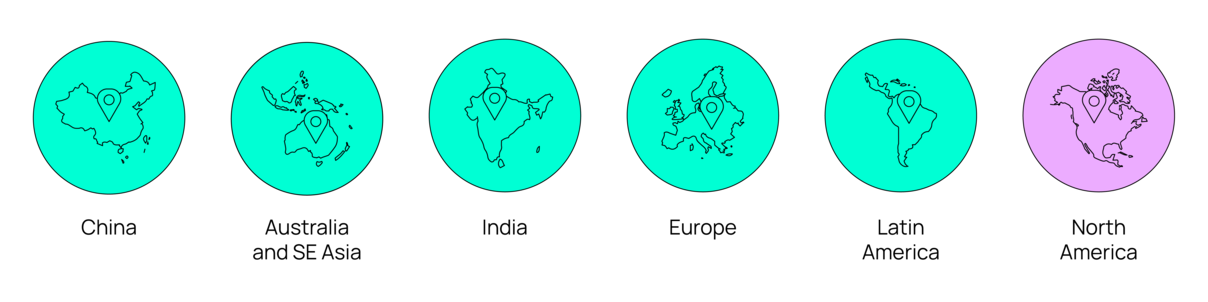
North America: navigating modernization, investment and AI readiness
In North America, the conversation shifts again. Compared with Europe, decarbonization appears to have become a less dominant theme in current investment discussions, while modernization, tariffs, trade protectionism, and fundamental technology choices have moved higher up the executive agenda. The central question is increasingly one of investment timing: What should producers invest in and when?
For companies considering the next generation of production management and manufacturing technology, the technology roadmap is no longer straightforward. Executives are actively weighing the strategic advantages of different hosting architectures: proven on-premise systems, cloud-based platforms, and hybrid approaches each offer different advantages, costs, and risks. At the same time, interest in AI and cloud capabilities continues to grow. The discussion is therefore less about whether digital transformation will happen and more about how it should be approached without committing capital at the wrong moment.
Tariffs and broader economic uncertainty are making companies more careful about major capital investments, but the underlying need for modernization has not disappeared. One particularly interesting signal is the emergence of new management roles around AI itself, for example “Enterprise Data and AI Enablement”. Their mission is not to buy shiny new algorithms, but to ensure that high-volume plant data from MES and ERP systems is structured, clean, and immediately ready to support operational AI models.
This is where a robust factory model becomes the essential foundation. By creating a digital twin of the entire production process, such a model provides the structured, “AI-ready” data these new roles require. To make this data actionable, innovative solutions are emerging – such as natively embedded assistants that act as semantic gatekeepers. Instead of writing complex queries, plant operators and data managers can use such tools to interact with their plant data in natural language, ensuring secure, context-aware access to the single source of truth. This combination allows producers to bypass the notorious “data cleaning” bottleneck, ensuring that any investment in Industrial AI delivers immediate and measurable operational value. The question is no longer simply “What can AI do?” It is becoming “How must we structure our data, our IT architecture and our organization to actually use it?” It is a distinctly American response to capital caution and a blueprint for how Industrial AI will scale across global operations.
Following the sun
By the time the sun has crossed the globe, one thing becomes clear: there is no single metals industry.
There is an interconnected global industry facing many of the same megatrends – Artificial Intelligence, sustainability, digitalization, energy costs, trade tensions, and skills shortages. But those trends interact with very different starting points.
In Australia, the green transition can become a strategy for building an entirely new industrial value chain. In India, digitalization is being built alongside rapidly expanding production capacity. In Europe, technology is being used to squeeze further efficiency from some of the world’s most optimized operations. In Latin America, it can help turn natural advantages into productivity. In North America, technology is increasingly part of a broader debate about modernization, investment, and timing.
For decades, traditional globalization encouraged companies to search for similarities between markets, chasing shared benchmarks and copy-paste playbooks. Today’s metals industry, however, demands a much more nuanced approach. True internationalization means knowing which lessons can travel and which decisions must remain local. The winners of the next decade will not be the the metals producers that adopt the same technologies but those that apply them to solve the right local challenges.
As our journey around the globe concludes, it becomes clear that our industry is not arriving at a single destination, but rather forging many paths to answer the same fundamental question: How do we compete and win in the world we are entering?
Chart your path with Industrial AI
Answering this question begins with understanding your own operational reality. Discover how PSI Software connects global best practices with local plant execution to transform your operations with Industrial AI.
Register for our complimentary assessment workshop or explore our latest use cases. Get in touch with our metals experts today.