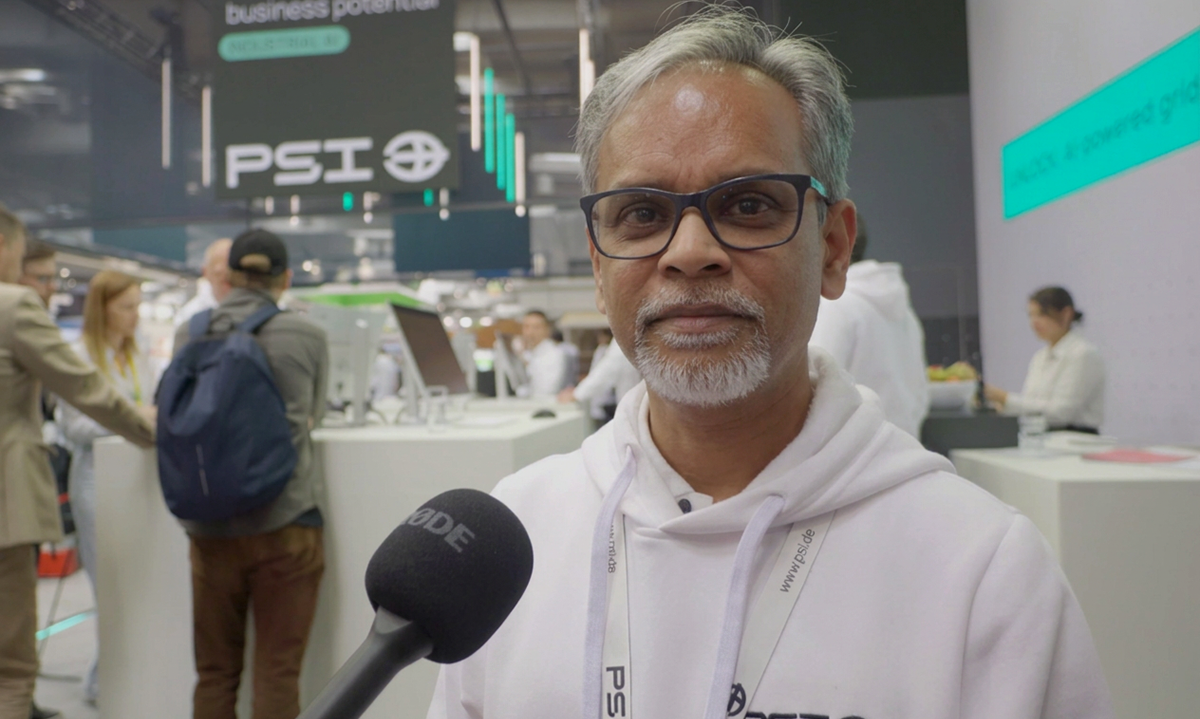
Nelson Philip Fernandes on changing countries, cultures and perspectives
From Malaysia to Germany – a different perspective on internationalization
Moving from Malaysia to Germany is more than a change of workplace. For Nelson Philip Fernandes, it meant leaving behind a familiar professional and social environment and starting a new chapter in Aschaffenburg. After many years working in Asia, including with PSI Incontrol, he took the opportunity to join PSI’s German organization and focus on international business development.
His experience offers a perspective on internationalization that goes beyond markets and products. In this interview, Nelson talks about what surprised him most after moving to Germany, how customer relationships differ between Asia and Europe, and what both sides can learn from each other.
Q: You have been connected to PSI and affiliated companies for many years. How did that journey begin?
I joined VA Tech SAT Sdn Bhd in Malaysia in July 2002. Together with PSI CNI, we won one of the largest SCADA/DMS projects at the time with TNB. Having just implemented a large regional SCADA/EMS control system in India, my superior and I were asked to take charge of the project in Malaysia.
Over the years, I experienced the transition from VA Tech SAT to Siemens, then to Incontrol Tech and finally to PSI Incontrol. During the 14 years I spent there, I was always closely involved with PSI Software-related solutions.
Q: You eventually returned to PSI after spending four years with a competitor. What made you decide to make the move to Germany?
After my 14 years with PSI Incontrol, I spent four years with a competitor, independently managing the Southeast Asian market and working remotely even before the pandemic.
Despite that, my colleagues at PSI were always dear to me, and we stayed in touch. When the opportunity to return came up several times, my wife and I eventually decided to take the leap.
Aschaffenburg was not completely new to us either. I had already lived there for a year during my previous time with PSI Incontrol. We both love challenges, and we said to ourselves: we only have one life.
Looking at Germany from Asia, we also saw a lot of value in what the country had to offer. I was ready and excited for a new challenge.
Q: You moved from Malaysia to Germany under particularly unusual circumstances. What do you remember most about those first months?
To be truthful, we probably rocked the boat too hard. Malaysia is a wonderful country to live in. We were very settled there and had a strong social and professional network.
We had carefully considered the move, but nature had its own plans—we moved right in the middle of COVID.
I flew to Germany first, while my wife was sent back from the airport on her first attempt. We finally met again six weeks later. During those six weeks, I opened my hotel door to find out that a fellow colleague had passed away, and my bank card was stolen, along with €1,000.
The following six months weren't much easier. We moved three times because the new apartment we had rented couldn't be completed on time. And finally, when we got the keys, the government announced a shutdown starting the next day.
I remember running to Bauhaus at 7 p.m. to buy lights for the apartment and then living among boxes through a harsh winter.
Ironically, the very things that brought us to tears at the time are some of the things that make me smile today. Germany brought out the painter, plumber, carpenter, handyman and every other possible trait in me.
In Mumbai or Kuala Lumpur, getting a service is often just a phone call away.
And I have to give a lot of credit to my colleagues. Without their help, settling in would have been much more difficult. German people are kind. We just need to get to know them.
Q: After spending so many years in Asia, what was the biggest difference you noticed in the way business relationships are built?
There are definitely differences. COVID also changed the way we approach customers and build relationships.
When I moved from Asia to Europe, travelling and meeting people in person was almost impossible for more than a year. Customers and vendors invested in various communication platforms, and the costs had to be justified. The question became: why meet someone physically when it can be done with a click of a button?
In Germany, I find that customers tend to be more technically oriented, with a strong focus on detailed evaluations. In Asia, building a personal relationship can come first. It helps reduce the perceived risk of buying from someone you don't know.
Q: Does that cultural difference also affect negotiations and decision-making?
In some respects, but I would say the basic principles are almost the same worldwide.
We have to play our cards well and develop a strategy. Some opportunities we win, and some we lose.
The electrical utility market, which is my domain, is enormous. If we position ourselves well, we can build a sustainable market share. No vendor is big enough to cover the entire market.
Q: Are there also differences in what customers expect from a solution?
Frankly, in Asia, if you have already built a strong relationship with a customer, it is easier to sell unique or different solutions beyond the norm.
The Asian market is, to a large extent, vendor-driven: be the pioneer and lead the way.
Europe is more regulated and processes are longer. The German market in particular is standards-driven and well structured.
Q: Has working across these different cultures changed your own way of working?
Work-life balance is probably one of the biggest differences. In Asia, it is often assumed that we are always available. It's just a cultural thing.
Growing economies need to put in more effort compared with developed ones. I believe it is a vicious cycle, and times can change over generations.
At the same time, I see a strong connection in sales and business development. The basic processes remain almost the same. I followed the Miller Heiman approach, and companies here use the same approach as well.
Q: You work internationally, so language is an important part of your everyday life. How do you handle it?
Fortunately - or maybe unfortunately - I don't face that challenge too much because I don't cater to the German or DACH market. All my sales cases are in English.
I would definitely love to improve my German, but for now I have a bigger market to address and spend my time on.
Earlier in my career, when I was an engineer, speaking three or four different languages in my home country helped me build relationships. It wouldn't necessarily solve an engineering problem, but it definitely helped put customers at ease.
Q: Your colleagues played an important role in helping you settle in. What did they do that made a difference?
They invited us to dinner at their homes, met us at restaurants, helped us with the language and supported us while we were settling in.
There is one thing I wish they had done differently, though: they should have forced me to speak German. Everyone wanted to improve their English, so they were happy to speak English with me.
I lost that particular bargain!
Q: If you could bring one mindset from your home country to Germany, what would it be?
The desire and determination to win.
And perhaps being a little faster. Life – and I myself – didn't even realize how the pace changed.
I don't intend to run as fast as I did back home, but I don't want to walk too slowly either.
That said, I can already see changes in the new PSI, and I believe they are for the better.
Q: You have worked in the energy sector across different markets. What changes do you see taking place in the industry?
The arrival of renewable energy has completely changed the dynamics of the grids. For a software company like PSI, that means more business opportunities.
Compared with a few decades ago, the decision-makers are changing as well. CIOs are becoming increasingly important stakeholders, while operations departments are their internal customers.
Disruptive technologies such as AI have added another dimension to the equation. Those who can find their "blue oceans" will be the pioneers and lead the way in energy-transition solutions.
Q: A last question – If you could give yourself one piece of advice before your flight to Germany, what would it be?
Learn German before taking off!
I would have been much more independent than I am now.